Sprint Demo · July 13 – 24, 2026
TechOps

Infrastructure · Legacy retirement
Rundeck is next: every warehouse job now runs on GitHub Actions
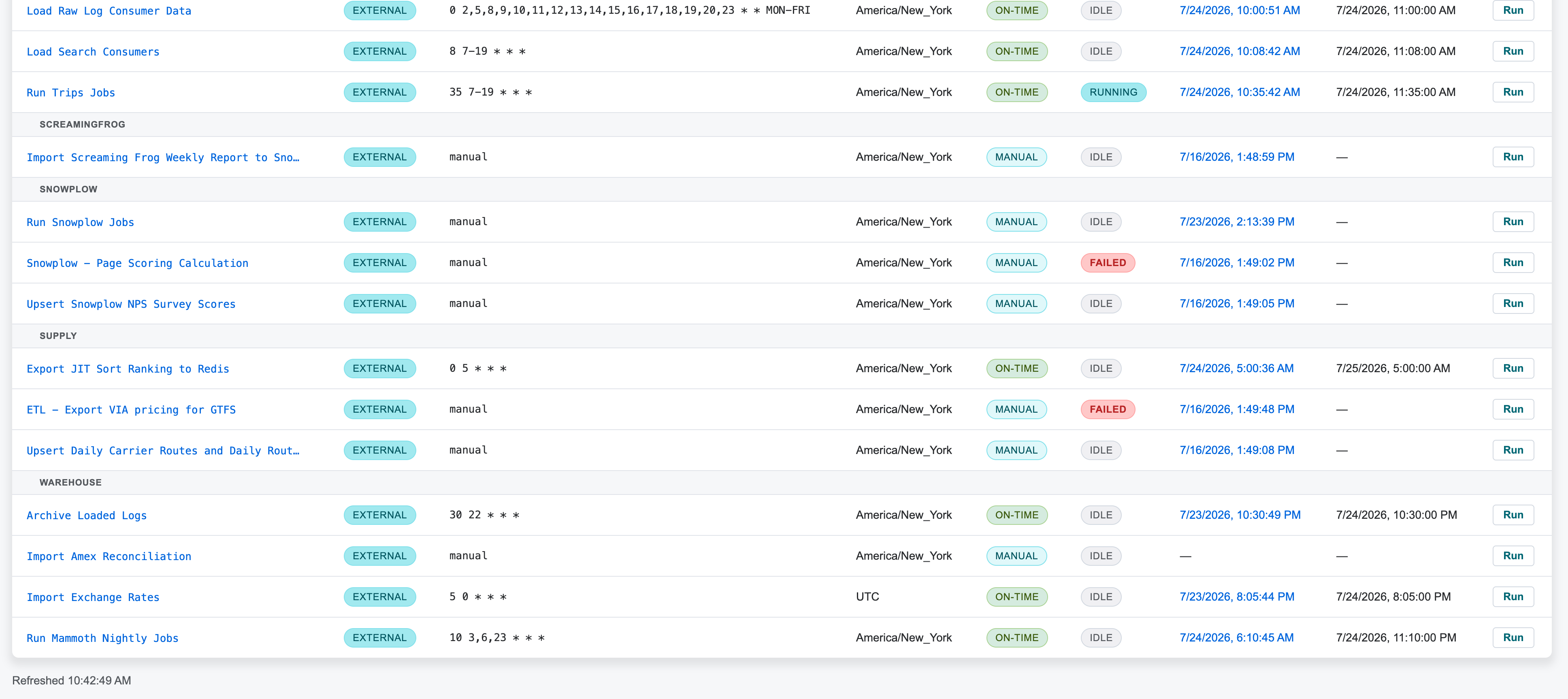
- All 69 warehouse Rundeck jobs now have GitHub Actions workflows in mammoth — organized on the gh-scheduler dashboard in the same 20 sections and job names Rundeck used
- Schedules cutting over in tiers: 16 jobs already run on their exact Rundeck cadence; each schedule enabled here is disabled in Rundeck, one for one
- Least-privilege IAM per job — dedicated GHA runner roles in infrastructure-as-code replace Rundeck's shared credentials
- gh-scheduler grew to match: dashboard sections, manual-dispatch jobs, cross-repo upstream triggers, and consolidated design docs
Security · Credentials
Snowflake machine users: passwords out, key pairs in
Snowflake is deprecating password-only logins. Our pipeline service accounts are moving to key-pair auth ahead of the deadline.
- Migrated this sprint: mammoth, warehouse-alerting, and cortex — dev and prod
- Keys live in AWS Secrets Manager, not the config repo — jobs fetch them at runtime through their runner roles
Rotation ready
Key pairs rotate without coordinating a password change across every consumer — each user supports two active keys.
Observability · Data pipelines
Pipeline jobs that tell you what went wrong
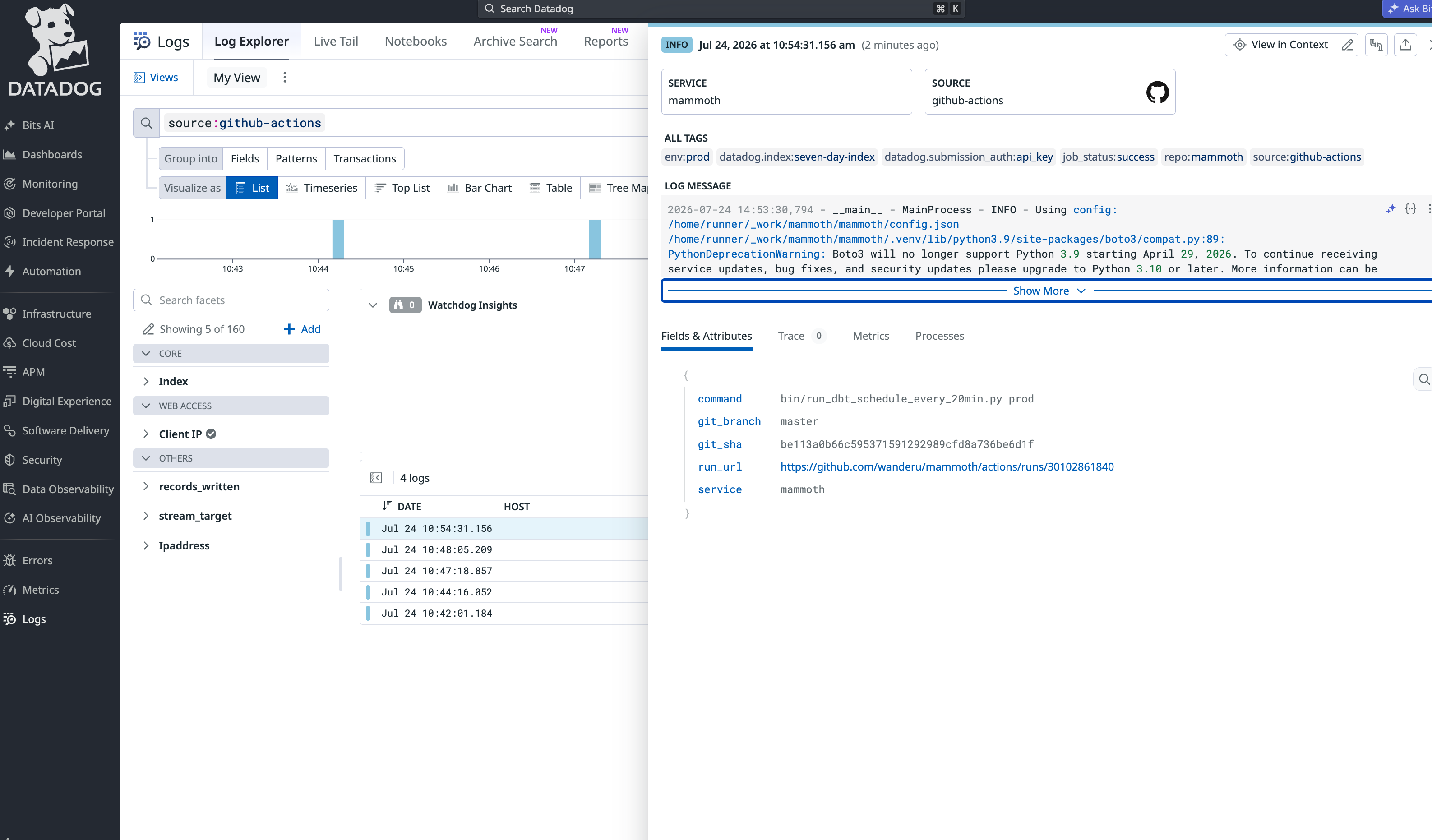
- Job logs now ship to Datadog — opt-in per workflow (
SEND_DATADOG_LOGS), with mammoth jobs opted in; failures are searchable next to the rest of our telemetry instead of buried in Actions run output
- Failure alerts say where: Slack alerts and workflow run titles now include the target environment — no more guessing whether dev or prod broke
- Multi-line stack traces stay whole — Datadog auto multi-line detection means errors arrive as one record, not thirty fragments
- Fail loud: the Cloudflare push loader no longer swallows errors, and archive-loaded-files reads straight from
load_history in parallel instead of scanning the whole bucket
Databases · DocDB migration
DocDB migration: production reads are live
Core collections are now served from Amazon DocumentDB, collection by collection.
- LiveExchange rates
- LiveCarriers
- LiveCities
- Up nextStations
- Up nextTrips
- A substantial MongoDB version upgrade over the legacy cluster it replaces
- Dynamically scalable — the prod cluster was resized to r6g.2xlarge with I/O-Optimized storage without a migration
- IAM authenticated — services connect with their own AWS identity; no more database passwords